1:38AI automation: from email to a controlled action
See how AI can help process a fictional email using fixed rules, controlled actions, human review and a trial that measures the whole business process.
Source articleAI automationSee how a fictional invoice moves through checks and exceptions, keeping missing information and repeated inputs from passing into another system unnoticed.
The spoken explanation, organised by chapter.
Administrative automation involves more than copying information as quickly as possible.
A fictional company receives a supplier invoice as a document. Its order reference is missing. The same file later arrives again while someone is still investigating the first copy.
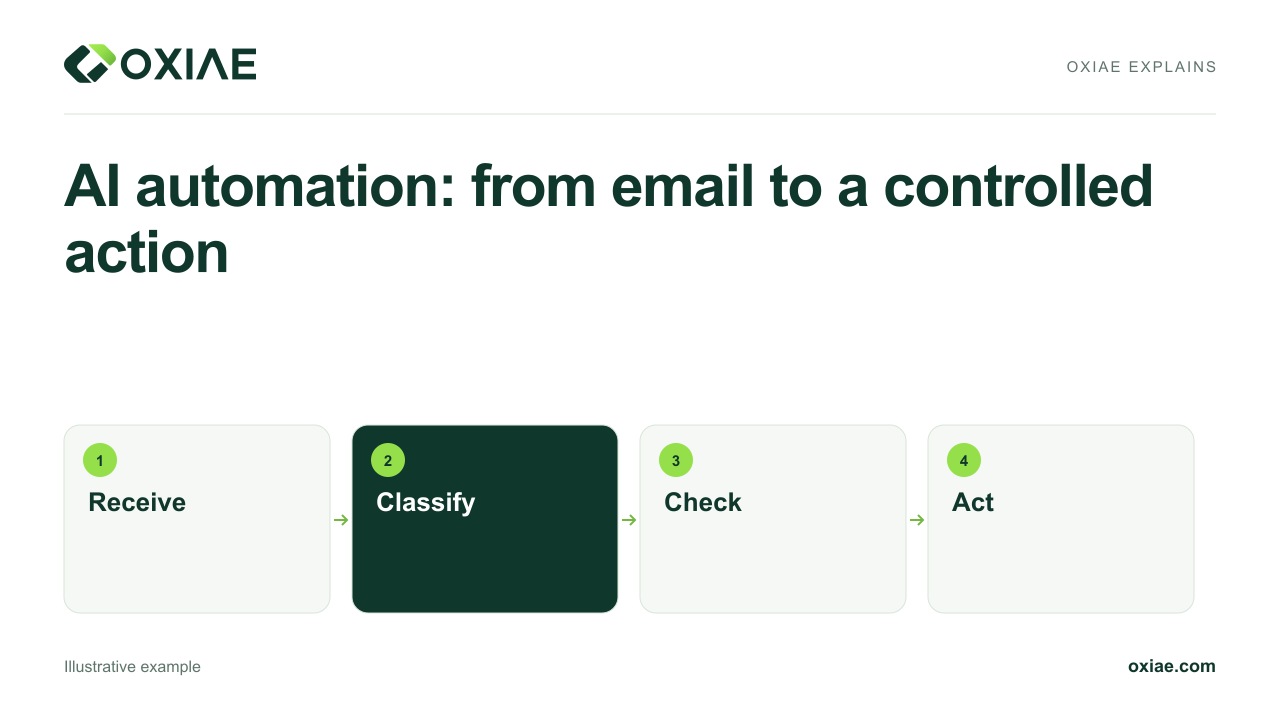
Receive the document, extract the required fields, check them and then choose the next step. Keep the original source linked to a recognisable processing reference so corrections can be traced.
A required reference must be present. Amounts and agreed fields need the relevant checks. A recognised duplicate must not trigger another processing action simply because someone submitted the file again.
AI can help read unstructured text or propose extracted values. But a plausible amount may still be wrong. The application and responsible staff member determine which checks remain necessary before further processing.
The invoice without an order reference goes to an agreed work queue. A staff member checks the source, adds permitted information and decides whether to resume. Automation does not invent the missing order.
Test correct, incomplete and repeated documents. Interrupt an integration too. Verify that the destination contains one correct outcome and that uncertain outcomes remain visible, including the staff time required to recover.
Begin with one document type and a clear owner. Compare handling time and errors with the existing process, including human review. Then decide whether extending the approach is worthwhile.
Read OXIAE’s guide to administrative automation using rules, integrations and appropriate checks.