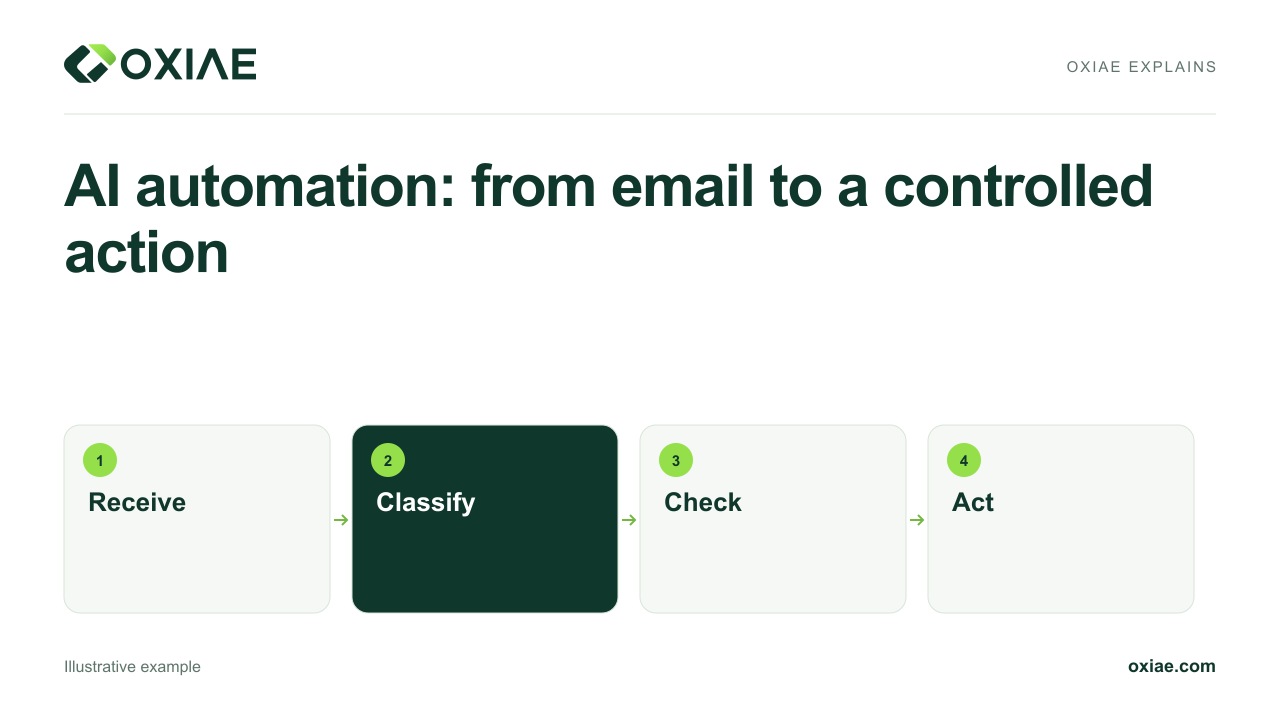
1:38AI automation: from email to a controlled action
See how AI can help process a fictional email using fixed rules, controlled actions, human review and a trial that measures the whole business process.
Source articleAI automationDiscover where AI adds value and turn opportunities into reliable automation.
Discuss your challengeYour team processes emails, documents or enquiries and repeats the same assessment or data entry. AI is especially relevant when that information varies or is unstructured. Fixed rules may already be enough for predictable tasks.
A defined process, a promising use case and a way to assess the outcome. I discuss with you which steps can be automated and where an employee remains responsible for decisions.
FIND YOUR STARTING POINT
Start with one task and an outcome you can assess. AI consulting helps investigate a specific question; an AI strategy connects priorities when several initiatives are underway.
Describe your work and discover opportunities for AI and automation. Free, online and without signup.
Explore this serviceTurn separate AI ideas into an informed decision for your business.
Explore this serviceAn AI strategy that starts with your business goals and leads to actionable decisions.
Explore this serviceExamine the rules, handovers and exceptions in the current work. Process automation defines repeatable steps and follow-up; administrative automation focuses on administrative data from documents and systems, validation and transfer into your administration. AI is an option for the steps that require interpretation.
Reduce manual handovers and improve visibility across everyday business processes.
Explore this serviceMake recurring processes consistent, traceable and less dependent on manual steps.
Explore this serviceProcess administrative information with less retyping and better checks.
Explore this serviceA good answer in a demo does not yet make a manageable process. AI workflow automation connects interpretation with actions, approval and recovery; AI implementation also defines rollout, acceptance, handover and ongoing operation with your team.
Run repetitive tasks through workflows that fit your existing systems.
Explore this serviceSpecify a fixed process chain around bounded AI steps, with explicit inputs, approval, system actions and recovery from uncertainty.
Explore this serviceTurn your AI plan into a solution employees can use every day.
Explore this serviceExplore these selected explanations alongside the service guides. Each video links back to its source article, transcript and relevant project tools.
1:38See how AI can help process a fictional email using fixed rules, controlled actions, human review and a trial that measures the whole business process.
Source articleAI automation
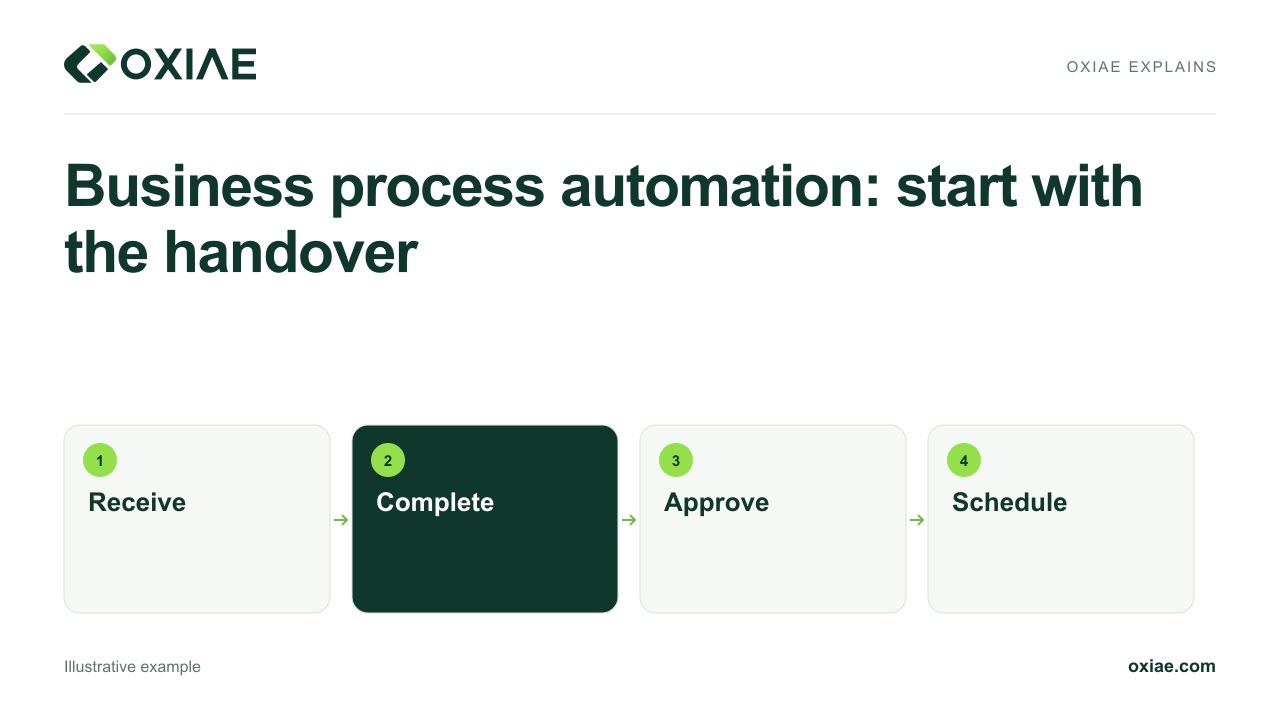
1:52Use a fictional service request to see how teams can automate handovers with clear information, meaningful states, accountable owners and exception paths.
Source articleBusiness process automation
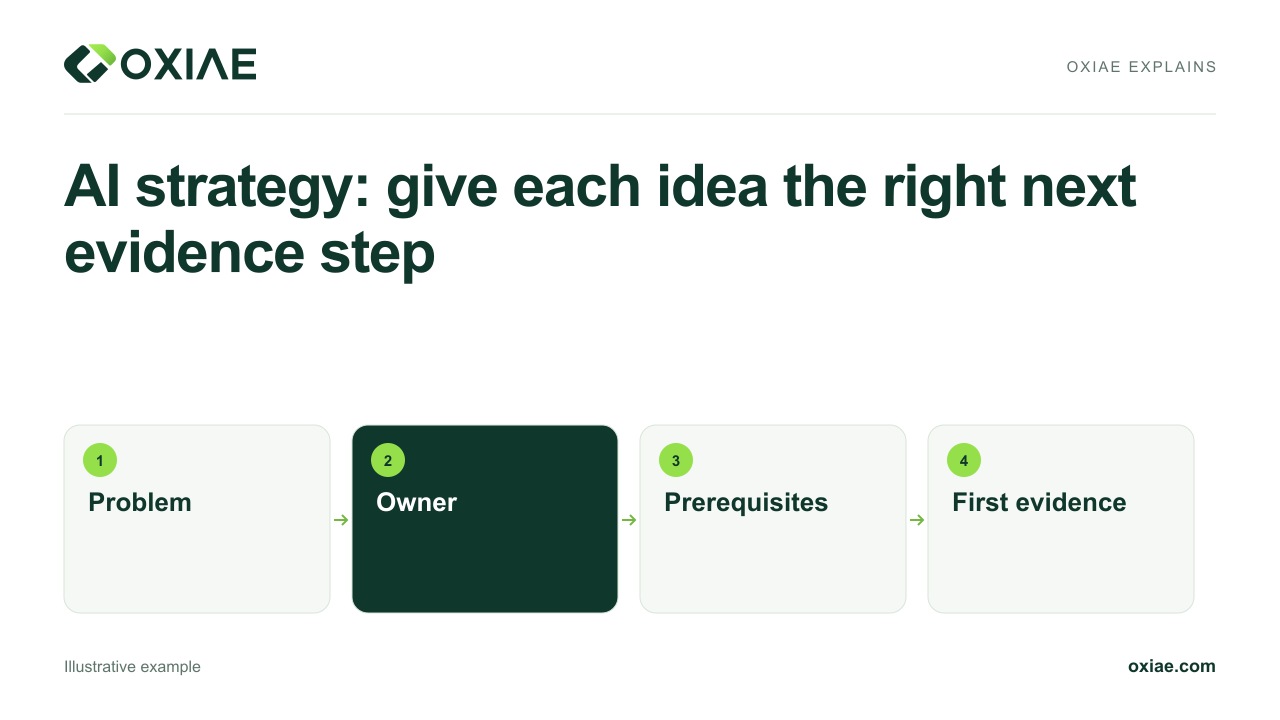
1:54Three fictional AI ideas receive different next steps. See how sources, ownership and dependencies create an actionable sequence without invented ROI claims.
Source articleAI strategyChoose one recurring task and identify where time, errors or handovers currently cause problems.
Compare AI, fixed rules and existing software features. Define what the trial needs to demonstrate.
Test real examples, discuss deviations and decide together whether introducing the use case makes sense.
At Eleads, Ricardo combined interpretation and classification with RAG and semantic matching in lead processing. The case shows how AI connects to concrete business rules and an existing workflow.
Project experience of Ricardo van der Spoel through Van der Spoel Development.
Choose one task from the services above. Describe the current process, the available information and the person who can approve the result. Then compare the requirements and acceptance checks on the relevant service page. The original documentation below helps you investigate the technical choices.
Create your project briefBasis for managing AI throughout its lifecycle.
Suggested actions for context assessment before investment.
Risk guidance for limiting executable actions.
Basis for bounded retries during temporary failures.