OXIAE / VIDEOIllustrative example

CRM integration: an email address is not a stable identity

An illustrative CRM example explains stable source references. See why matching rules, shared email addresses and human review matter when linking customer records.

By Produced by OXIAEPublished

With narration and captions. Playback starts when you choose it.

Read along

Transcript

The spoken explanation, organised by chapter.

0:00Which records represent the same relationship?

This accompanies our article on CRM integration. Establish which records represent the same person or organisation and which information each system owns.

0:12Same address, different contacts

Two fictional contacts share a general email address. Matching only that address could merge their records. Later, one contact changes address.

0:22Connect stable source references

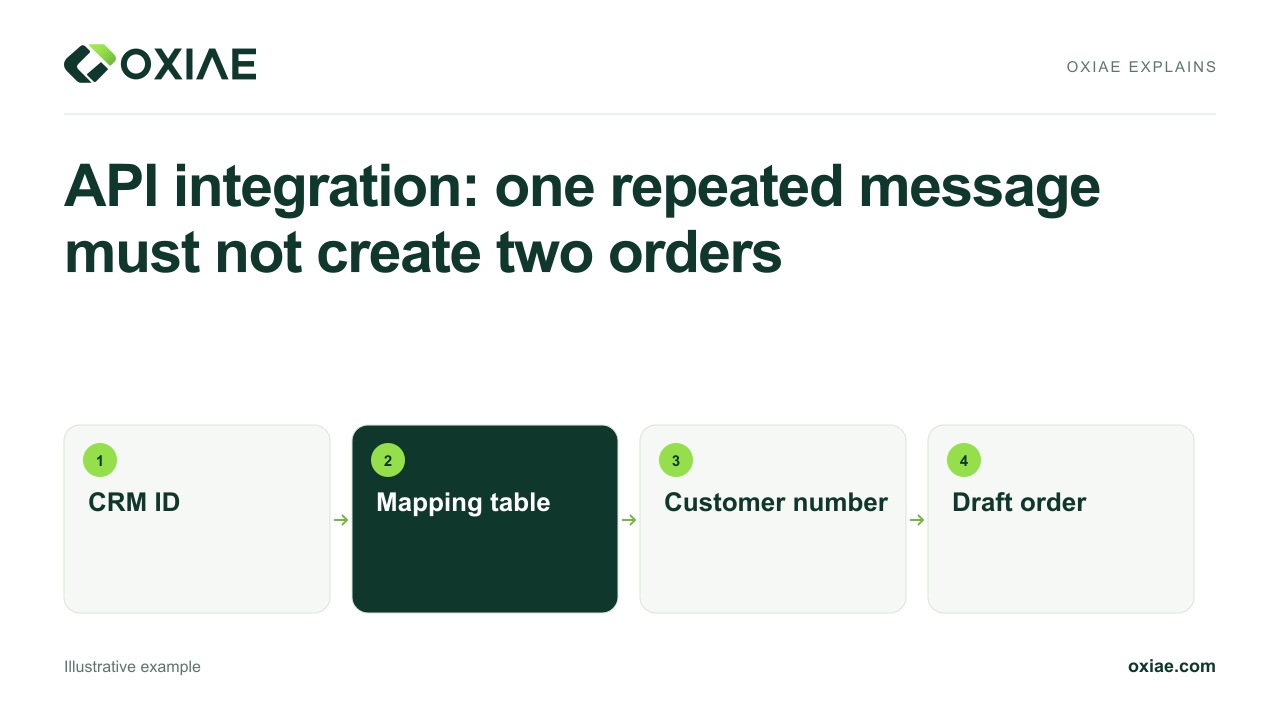
Each source system keeps its own stable identifier. An explicit mapping table connects those references to the correct destination record. Identity does not change merely because a name or address changes.

0:36Make matching rules explicit

Define when a relationship exists, which combinations need review and who may confirm a new mapping. No match or several candidates must not automatically create another customer record.

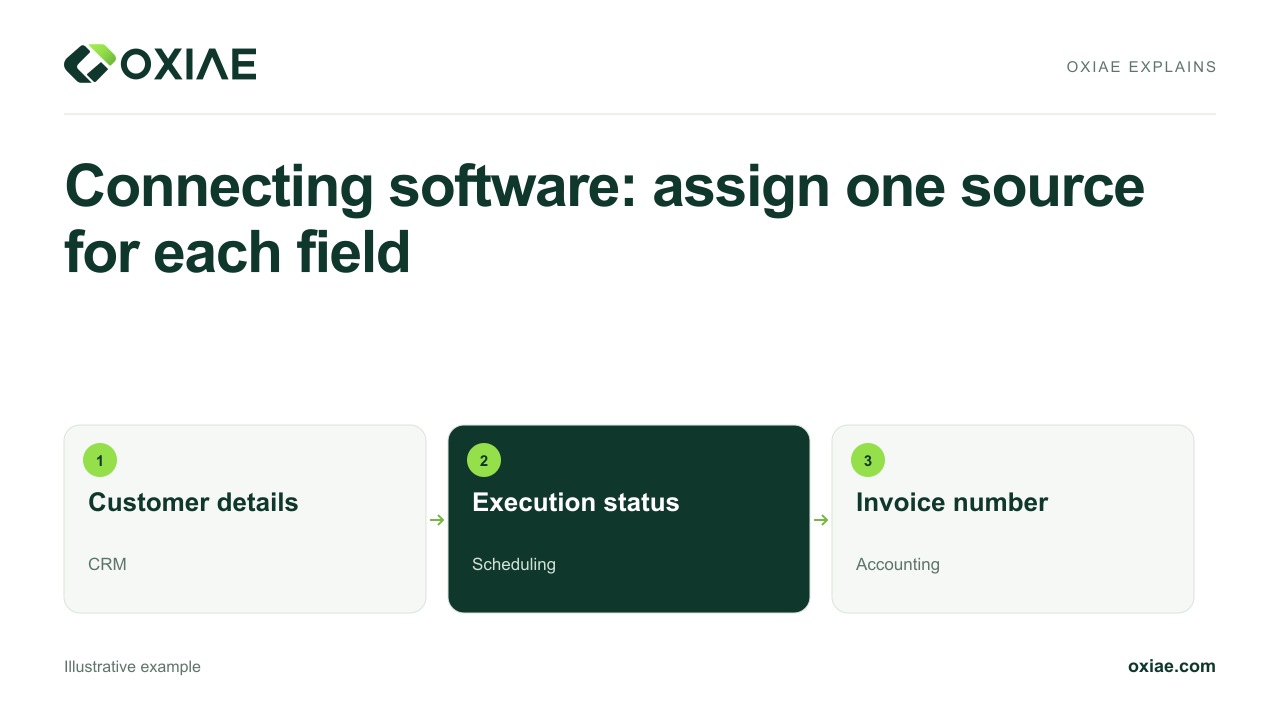
0:49Fields have different owners

The CRM may own the account manager, while accounting owns billing information. Transfers update only agreed fields. A returned record must not start an endless loop of changes.

1:02Route uncertainty to a reviewer

For our shared email address, a person compares source references and relationship details. Only then is a mapping recorded. Similarity alone must not merge the contact histories.

1:14Test exceptional cases too

Test changed addresses, merged contacts, concurrent messages and archiving. Reconcile created, updated and rejected records against the source, so incomplete synchronisation does not remain unnoticed in daily use.

1:30Assign recovery ownership

Show which record was rejected and why. An administrator should be able to correct and reprocess that record without restarting the entire synchronisation or creating another customer relationship.

1:43Link relationships deliberately

CRM integration starts with identity and responsibility, rather than a name lookup. Our source article explains recognition, field agreements, error handling and controlled synchronisation in more detail.